
Global Markets Face a Challenging Trading Environment
Global financial markets are entering another uncertain trading session as investors assess the combined impact of rising energy prices, inflation concerns, corporate earnings and escalating geopolitical tensions. Market sentiment remains cautious, with investors closely monitoring bond yields, central bank policy signals and developments in the technology sector. On Thursday, October 8, US markets delivered a mixed performance. The S&P 500 declined 0.5% to close at 7,765.36, while the Nasdaq Composite fell 1.3% to 27,193.34. The Dow Jones Industrial Average edged up 0.1% to finish at 51,231.64. Technology stocks faced considerable pressure, highlighting investors’ growing sensitivity to valuations, financing costs and future earnings expectations.Inflation Concerns Return to the Forefront
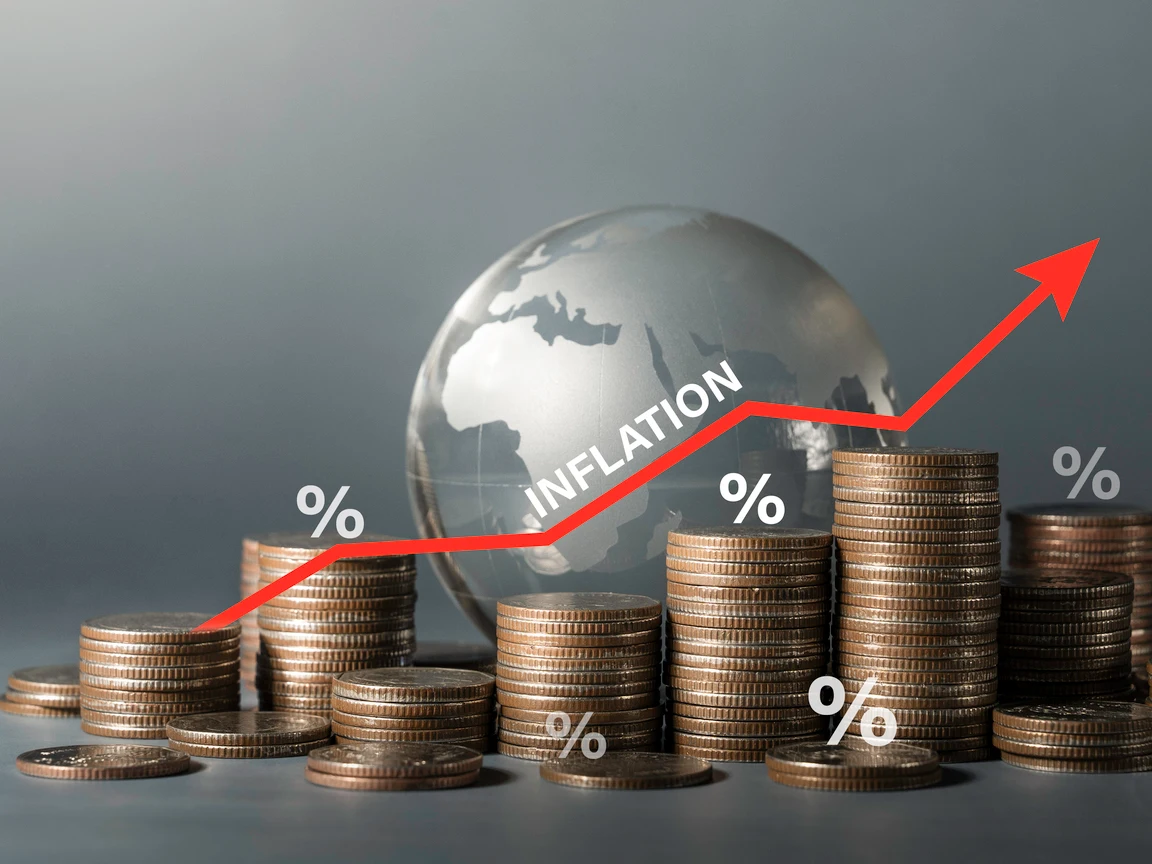
Inflation has once again become a central concern for global investors. The recent rise in crude oil prices is increasing uncertainty over the future cost of transportation, manufacturing and energy-intensive business operations.
Brent crude climbed above $104 per barrel during Thursday’s trading session, driven partly by geopolitical tensions in the Middle East and concerns about supply disruptions. Higher oil prices can increase operating expenses for companies and reduce consumers’ purchasing power, potentially affecting economic growth.
For central banks, persistent inflation creates a difficult policy environment. If energy costs continue to rise and inflationary pressures become entrenched, monetary authorities may have less flexibility to reduce interest rates. Higher borrowing costs could then affect corporate investment, household spending and equity valuations.
Investors are therefore watching economic data, government bond yields and central bank communications for indications of the likely direction of monetary policy.
Corporate Earnings Under Close Scrutiny
The ongoing earnings season is providing another important direction for financial markets. Investors are looking beyond headline revenue and profit growth to assess operating margins, cash flows, debt levels and management guidance. Technology companies remain particularly sensitive to changing expectations. Businesses investing heavily in artificial intelligence infrastructure, semiconductor capacity and data centres face questions about the scale of their capital expenditure and the time required to generate adequate returns. Recent weakness in semiconductor shares and selected technology companies demonstrates that strong long-term growth expectations do not necessarily protect stocks from short-term corrections. Investors are increasingly distinguishing between businesses with sustainable earnings growth and those whose valuations depend on ambitious future projections. In India, quarterly results are also attracting attention. Tata Consultancy Services reported second-quarter FY2027 net profit of ₹13,884 crore and revenue of ₹73,188 crore. However, its operating margin was reported at 24%, below the cited market estimate of 24.38%. The results illustrate why investors examine profitability and forward business prospects alongside headline growth.Geopolitical Risks Keep Markets on Edge
Geopolitical developments remain a major source of uncertainty. Tensions in the Middle East have contributed to volatility in energy markets, while concerns about international trade and regional conflicts continue to influence investment decisions. A prolonged disruption to energy supplies could intensify inflationary pressures across economies that rely heavily on imported oil and gas. Emerging markets may face additional challenges from higher import bills, currency pressure and changes in foreign investment flows. Geopolitical uncertainty can also encourage investors to reduce exposure to riskier assets and increase demand for selected defensive investments. However, market reactions vary depending on the severity of events, the availability of alternative supplies and expectations for government policy responses. For businesses, uncertainty can delay investment decisions and complicate supply-chain planning. For investors, it makes diversification and careful assessment of downside risks increasingly important.Indian Markets: Oil Prices and Global Cues in Focus
Indian equities have also experienced significant pressure. On Thursday, October 8, the Sensex declined 1.44% to close at 71,593.24, while the Nifty 50 fell 1.64% to 22,231.80. Rising crude oil prices, higher US Treasury yields and geopolitical concerns contributed to the cautious sentiment. For October 9, early indications suggested the possibility of a positive opening, with GIFT Nifty gaining approximately 100 points to 22,359. Nevertheless, any recovery will need to contend with global volatility, oil-price movements and foreign institutional investment flows. An indicated opening is not a guarantee of how the market will perform throughout the session. India’s dependence on imported crude makes energy prices especially important for the domestic economic outlook. A sustained increase in oil prices can place pressure on the trade balance, the rupee, corporate margins and inflation expectations. Sectors with high energy or transportation costs may face greater pressure, while the impact on individual companies will depend on their ability to pass higher costs on to customers.What Investors Should Watch Today
Market participants are likely to focus on five major developments:
1. Crude oil prices: Whether energy prices continue rising or begin to stabilise.
2. Bond yields and interest rates: Signals about future borrowing costs and central bank decisions.
3. Corporate earnings: Profitability, management guidance and the sustainability of growth.
4. Geopolitical developments: Any escalation or easing of tensions affecting energy supplies and global trade.
5. Foreign investment flows: Whether institutional investors continue reducing exposure to equities or return as valuations adjust.
These indicators could influence the direction of global markets as well as investor confidence in India.