
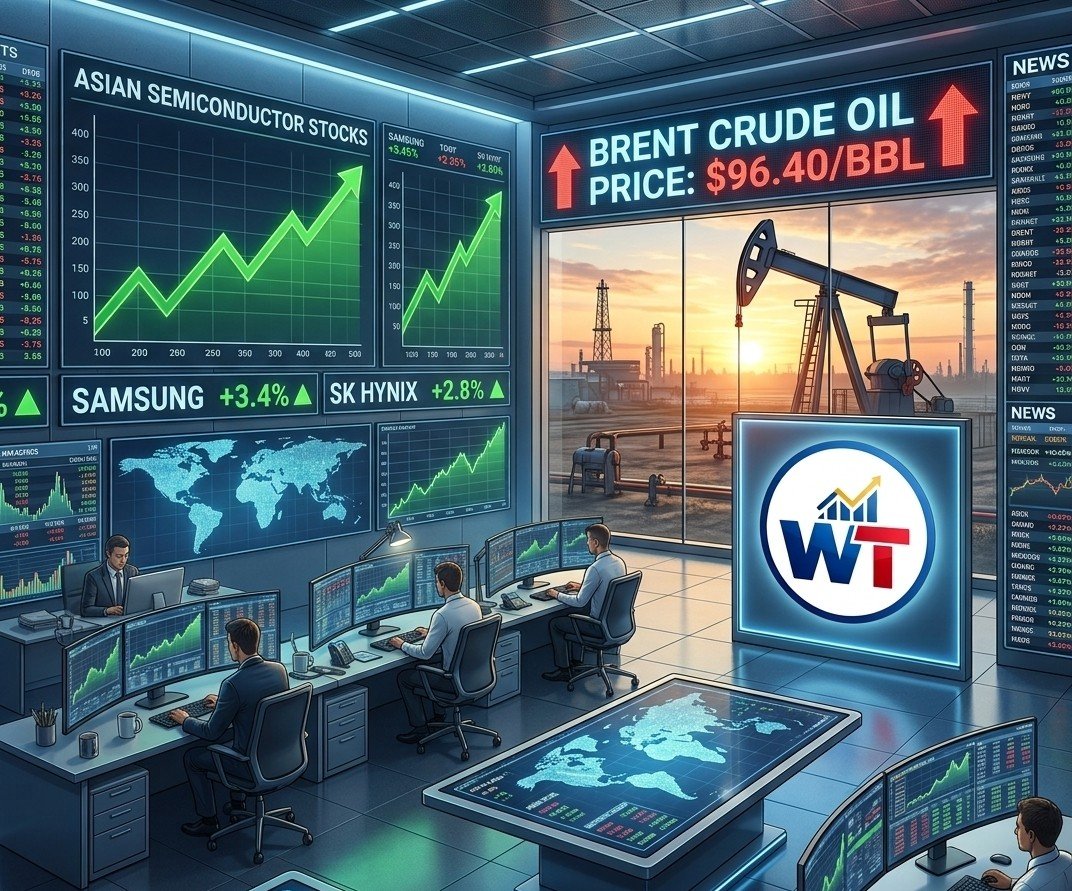
Asian Stocks Recover as Investors Await US Inflation Data; Oil Prices Keep Sentiment Fragile
Global financial markets presented a mixed picture on Wednesday, October 14, as Asian equities attempted to recover from a technology-led sell-off while investors remained cautious ahead of key US inflation data. A rebound in semiconductor stocks offered some relief, but elevated crude oil prices, geopolitical tensions and uncertainty over the Federal Reserve’s next interest-rate decision continued to weigh on investor confidence.
The latest market developments highlight a delicate balance between optimism over corporate earnings and concerns about inflation, energy supplies and the sustainability of technology-sector valuations.
Asian Markets Find Support in Technology Stocks
Asian equities edged higher in early trading after a sharp sell-off in artificial intelligence-linked stocks in the previous session. South Korea’s Kospi gained approximately 1.8%, while Japan’s Nikkei 225 advanced around 0.2%. The MSCI Asia-Pacific index excluding Japan rose about 0.5%, supported by renewed buying in semiconductor companies.Samsung Electronics and SK Hynix rebounded as investors reassessed recent losses across the AI supply chain. However, the recovery remained tentative, with market participants questioning whether the strong investment cycle in artificial intelligence can translate into sustainable earnings growth.
The uneven performance of technology shares suggests that investors are becoming more selective. Companies with credible earnings growth and resilient balance sheets may continue to attract capital, while richly valued businesses face greater scrutiny.
Wall Street Signals Caution
US equity markets ended Tuesday’s session with modest losses. The S&P 500 slipped less than 0.1% to 7,805.45, the Dow Jones Industrial Average declined 0.3% to 51,670.10, and the Nasdaq Composite fell 0.2% to 27,204.38.The relatively small index movements concealed considerable volatility in individual stocks as investors evaluated quarterly corporate earnings. Mixed results from major US banks weighed on sentiment, even as stronger corporate profits provided some support to the broader market.
Attention is now shifting towards the US Consumer Price Index (CPI) report. Investors are looking for evidence that inflation is easing or, alternatively, that rising energy costs could force the Federal Reserve to maintain restrictive monetary conditions for longer.
A higher-than-expected inflation reading could strengthen expectations of further monetary tightening, potentially pressuring equities and increasing volatility in bond and currency markets.
Crude Oil Emerges as a Major Risk
Energy prices remain a central concern for global investors. Brent crude traded around $106.60 per barrel, while US crude approached $95, amid heightened concerns about energy supplies following attacks on Saudi Arabia.Sustained increases in oil prices can raise transportation, manufacturing and logistics costs, putting pressure on corporate profit margins. They can also complicate the inflation outlook for major economies, limiting central banks’ flexibility to lower interest rates.
For oil-importing economies such as India, expensive crude presents an additional challenge through higher import costs, potential currency pressure and the risk of renewed inflation. These factors can influence foreign investor flows and domestic equity valuations.
Indian Markets Face Mixed Global Cues
Indian equities entered Wednesday after a strong rally in the previous session. On Tuesday, the BSE Sensex climbed 1.54% to 73,033.78, while the Nifty 50 advanced 1.6% to 22,721.95. Strong earnings from major information technology companies, alongside improved sentiment following comments on possible tax changes, helped support the advance.However, elevated oil prices and cautious global sentiment could limit further gains. Investors will also monitor upcoming corporate earnings, particularly from technology companies, to assess whether recent improvements can be sustained.
The Worldonomics Times View
Global markets are likely to remain sensitive to incoming inflation data, corporate earnings and geopolitical developments. While technology shares have shown signs of recovery, the broader investment environment remains uncertain.For investors, the immediate priority is to distinguish temporary market rebounds from durable improvements in economic and corporate fundamentals. Diversification, disciplined risk management and attention to valuation remain important as markets navigate the competing forces of earnings growth, inflation and monetary policy.